
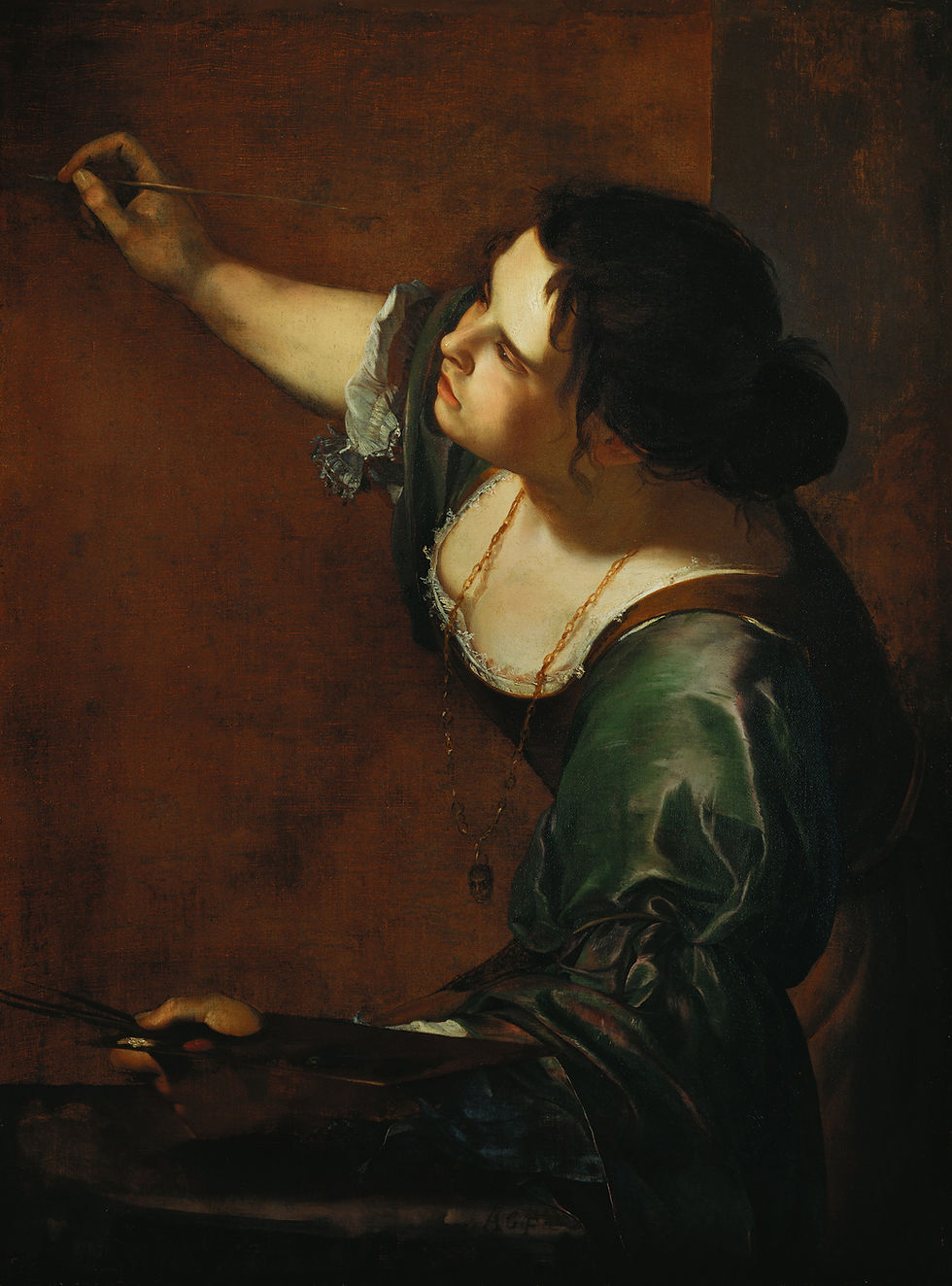
#9 Artemisia Gentileschi with Ava Siena Cohen
Art History, Baroque history, Artemisia Gentileschi, Interview
Find Ava on Instagram and TikTok @bar0quebarbie
Ava is a second year PhD student at Durham University. She works in the Italian department but her subject is both Italian studies and art history. Her working title is 'Whose Artemisia: the making and remaking of a female artist (1915-2025)' which deals with reception of Artemisia Gentileschi in scholarship, fiction and exhibition history. While the topic has Artemisia at its core, it brings in a few side topics including the Rivolta Femminile (second wave Italian feminism), how do we do art history, and the role of historical fiction.
Ava - time to introduce herself and her work
On to the woman we’re here to talk about - Artemisia Gentileschi. For anyone who doesn’t know, can you give us a really quick overview of who she was?
Questions
I have split the questions into 6 parts and each part has follow up questions also - we might not cover everything so this is just here as a guide rather than a script.
Life and Career
Artemisia trained under her father Orazio but quickly established independence. How much of an influence do you think he had on her and her work?
How do you think her movements across Rome, Florence, Venice, Naples, and London shape her career and reputation?
Potential Follow-ups:
What does that suggest about Artemisia’s agency as an artist?
Do you think her mobility was a choice, or more of a necessity?
How unusual was it for a woman to manage her own commissions at this time?
Historiography
You advocate for Longhi’s 1916 biography to have more precedence in Gentileschi studies, why do you think it is so important?
Why do you think her art has been framed through trauma?
How can we move past the reductive “revenge fantasy” framing of Judith and Susanna? What do we lose if we stay within that paradigm?
Potential Follow-ups:
Do we risk romanticising Artemisia if we frame her only as exceptional?
Why do you think the rape trial remains such a persistent lens?
Judith and Susanna
Judith Slaying Holofernes and Susanna and the Elders are often treated as her defining works. What do you think about these works and what they mean for understanding her art?
Which field of works — her histories, allegories, or self-portraits — are most important for understanding her legacy and her own sense of identity?
Follow-ups:
How does Artemisia’s depiction of the female body differ from male contemporaries like Orazio, Caravaggio, or Carracci?
What happens when we take Judith and Susanna out of the centre of her story? - why do you think so many people like to focus on these works?
Is there a danger in over-identifying Artemisia with her painted women?
Gender, Feminine Perspective, and Memory
Her paintings reflect a feminine perspective, but not necessarily a feminist one in the modern sense. How do you understand that distinction?
Do you think (art) historians apply a double standard — asking gendered questions of women artists but not of men?
How are female artists remembered differently, and what does Artemisia’s case tell us about those biases?
Potential Follow-ups:
Would we ask the same questions of a male artist?
Do you think we impose modern ideas of feminism onto Artemisia?
How do her works help us think about the broader history of women in art?
Patronage and Commissions,
How important was patronage for Artemisia’s ability to craft her identity and reputation?
What role did commissions play in shaping the kinds of women she painted?
Potential Follow-ups:
How much freedom did she really have when working on commission?
Was her identity shaped more by her patrons’ needs, or by her own artistic choices?
Reception and Exhibitions
Recent exhibitions, such as the 2020 Artemisia show at the National Gallery in London, reframed her as both artist and survivor. Do these strike the right balance, or risk reinforcing reductive narratives?
What other exhibitions have focussed on Artemisia in recent years and what stories do they tell?
Can you tell us how she became an icon of 1970s feminism?
Potential Follow-ups:
Do blockbuster exhibitions help or hinder nuanced readings of her?
Why do you think she resonates so strongly with a contemporary audience?
Is Artemisia a feminist icon, or has she been turned into one after the fact?
Power in Numbers
Programs
Locations
Volunteers